Build a mental map
Connect every street name with its position instead of memorising an isolated list.
PATROL AREA FAMILIARIZATION · NEW ASSIGNMENT
When an address or intersection is dispatched, knowing the main roads, side streets and connections between neighbourhoods helps you understand the area you serve. Name This Street turns your patrol area into short recall exercises on a real map.
FreeNo sign-upLocal progress
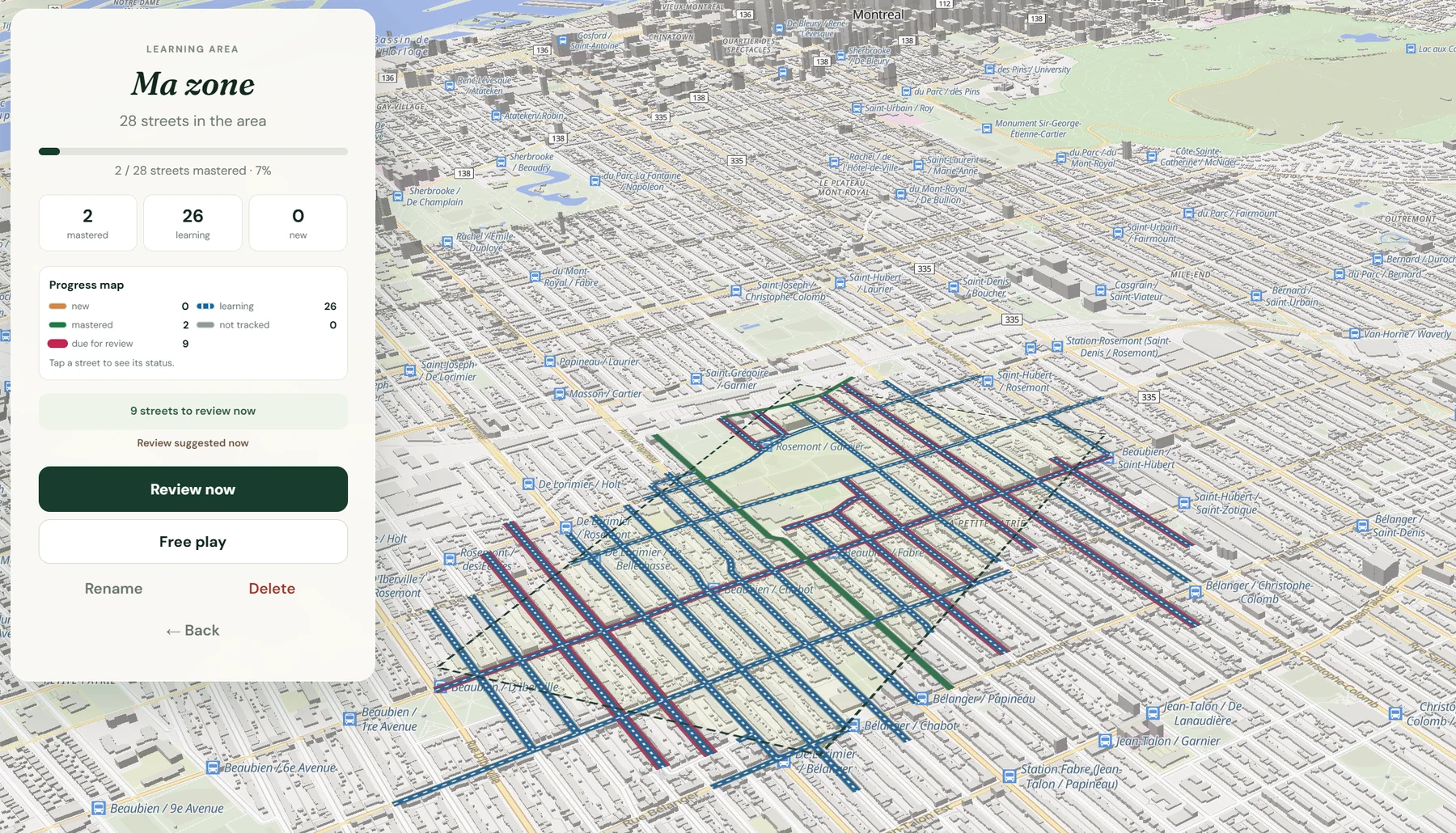
Connect every street name with its position instead of memorising an isolated list.
Learn how streets relate to one another and to the area’s main roads.
Become familiar with streets and neighbourhoods discussed at shift briefing.
Learning mode brings back streets that still need active recall.
FROM ROUTE TO RECALL
A recruit may follow a route, recognise a landmark or find the station without being able to recall the street name immediately. Area knowledge also grows through names, directions and intersections.
“The street name comes over the radio. Can you already place it in your patrol area?”
The game provides a complementary practice space: attempt an answer, see the street in context and repeat until its name becomes familiar.
A SIMPLE ROUTINE
Use the game between training activities to organise street-name recall. Start small, then expand the territory as the first roads become familiar.
Position the map over the immediate territory of your assignment.
Save that territory as your personal learning area.
Answer from the map or a street photo when one is available.
Difficult streets return sooner in review sessions.
Gradually add main roads and neighbouring areas.

THE PRODUCT IN PRACTICE
Name This Street hides the label of a road in the selected area. Identify it from four names and the answer appears directly in its map context. Some questions also use street-level photos.
In learning mode, every street keeps its own history: new, learning, due or mastered. Progress stays in the browser, with no user account.
Try it with my patrol area streets →AT SHIFT BRIEFING OR BETWEEN ACTIVITIES
A short session can target streets that are due or let you practise freely across your area.
THE RIGHT PLACE IN YOUR TRAINING
The game’s value is deliberately specific: practising street-name recall and relative location. Decisions in the field must always rely on your police service’s approved tools, procedures and operational information.
WHO IS IT FOR?
Start around the station before gradually widening the territory.
Rebuild your reference points after moving to a new station or patrol area.
Review streets and intersections in a less frequently travelled area.
Use the game as individual preparation before an area discussion.
FREQUENTLY ASKED QUESTIONS
Start with a small patrol area. Try to recall each name before seeing the answer, connect the street with its intersections and review confusing roads more frequently. Expand the area once the first section becomes familiar.
No. It supplements only the learning of street names and positions. It does not replace department training, area tours, procedures, official maps, dispatch tools or approved navigation systems.
No. The game focuses on recognising streets from a map or photo. Precise addresses, access, hazards, restrictions and other operational information must be consulted in official sources.
Define an area. Each street keeps its attempts, mistakes, successful recalls, state and next review in the browser’s local storage.
Yes. The game is free, requires no sign-up and works in mobile and desktop browsers.
TAKE OWNERSHIP OF THE AREA
Frame your territory, create the area and begin practising.
Create my learning area →Supplementary educational tool. Always use the maps, procedures, navigation systems and operational information approved by your police service.